The supplement market is expanding, but rapid growth increases the cost of choosing the wrong manufacturing partner. Grand View Research valued the global dietary supplements market at approximately $177.5 billion in 2023. Its report also projects continued growth through 2030, supported by wellness awareness, preventive health, and personalized nutrition.
Private Label Supplement Manufacturing helps brands enter this market without building their own production facilities. A typical project may involve formula development, raw material sourcing, testing, packaging, and batch release. Each step affects product quality and customer trust. A delayed certificate, unclear ingredient origin, or weak stability process can quickly damage a promising launch.
The details matter.
This article reviews 10 Best Private Label Supplement Manufacturing Companies through practical and quality-focused criteria. These include cGMP compliance, third-party testing, formulation expertise, minimum order quantities, production flexibility, documentation, and communication. The U.S. Food and Drug Administration requires dietary supplement manufacturers to follow current Good Manufacturing Practice standards under 21 CFR Part 111. However, compliance claims still need verification. A badge on a website is not enough.
The National Institutes of Health Office of Dietary Supplements also emphasizes accurate labeling, ingredient evidence, and responsible product communication. These principles guide this comparison. Still, no ranking can replace a facility audit, sample review, or legal assessment for a specific market. Some information may change as companies update certifications and capabilities. That limitation deserves attention.
A reliable partner should make quality visible, not merely promise it. The strongest manufacturers combine technical knowledge, traceable systems, responsive service, and realistic production commitments.
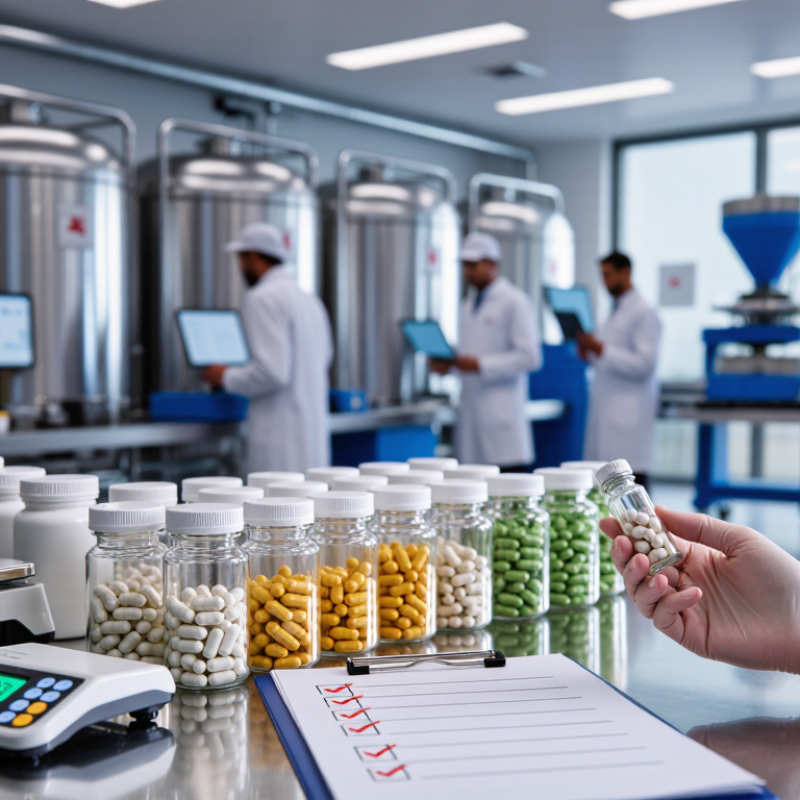
What Private Label Supplement Manufacturing Involves
Private label supplement manufacturing turns a product idea into a controlled, market-ready formula. The process usually includes ingredient sourcing, formulation, pilot batches, laboratory testing, packaging, and production scheduling. According to Grand View Research, the global dietary supplements market was valued at approximately USD 177.5 billion in 2023. That scale increases competition, but it also raises expectations for evidence, consistency, and traceability.
A reliable manufacturer should operate under current good manufacturing practices, including the controls described in FDA 21 CFR Part 111. This means reviewing supplier documents, testing identity and purity, recording batch details, and investigating deviations. Independent certifications can strengthen confidence, but they do not replace proper due diligence. A certificate alone proves little if testing records are incomplete. In practice, formulation timelines often change because an ingredient fails specification or packaging creates stability concerns. That is normal, but weak communication is not.
Tips: Request a sample certificate of analysis, stability data, allergen statement, and recent audit information before signing. Check whether the laboratory uses validated methods. The Council for Responsible Nutrition’s 2023 consumer survey reported that 74% of U.S. adults use dietary supplements, showing why clear labeling matters. Still, private label manufacturing is not simply placing a logo on a bottle. Claims, serving sizes, warnings, and market-specific rules require careful review. A practical gap remains: many new businesses focus on design before confirming shelf life, testing costs, and minimum order quantities. That mistake can become expensive quickly.
Key Criteria for Evaluating Supplement Manufacturers
Choosing among the 10 best private label supplement manufacturing companies requires more than comparing prices. A reliable manufacturer should provide current GMP certification, clear quality procedures, and batch-level traceability. Ask where raw materials are sourced and whether each ingredient has a certificate of analysis. Independent testing for identity, purity, heavy metals, and microbial limits adds important protection. The laboratory’s accreditation also matters. A polished website is not proof of quality.
Manufacturing experience should match your product’s needs. Ask about formulation support, stability testing, allergen controls, minimum order quantities, and packaging conditions. Request sample records, production timelines, and details about handling complaints or recalls. I have seen buyers focus too heavily on low minimums, then discover limited testing options. That trade-off can damage trust. Communication quality is another practical measure. Slow, vague answers may signal deeper operational problems.
Tips: Visit the facility when possible. Review recent audit findings. Confirm that label claims follow applicable regulations in every target market. Check whether finished products receive testing before release. Keep written specifications for color, texture, dosage, and shelf life. Do not rely only on samples. A sample can look excellent while routine production varies. Leave room for questions, especially when a supplier’s documentation seems incomplete. That hesitation may save money later.
Profiles of the 10 Best Private Label Supplement Companies
The ten best private label supplement manufacturing companies stand out through documented quality, flexible production, and practical communication. One profile may specialize in capsules, offering precise filling and clear batch records. Another may focus on powders, with blending rooms designed to reduce ingredient separation. A third may produce gummies, while another handles liquids, tablets, or convenient stick packs. These differences matter when a product must match its serving size, texture, and packaging format.
Several leading manufacturers support botanical formulas, sports nutrition products, or everyday wellness lines. Their strongest profiles usually include GMP certification, identity testing, contaminant screening, and certificates of analysis for finished batches. Experienced teams also explain minimum order quantities, lead times, storage needs, and label review procedures before production begins. Some provide formulation support, while others prefer client-supplied recipes. That distinction can affect ownership, revisions, and launch speed. Not every profile fits every project.
Tips: Request recent test documents, production samples, and a written quality agreement. Ask how deviations are investigated and how retained samples are stored. Confirm whether testing covers the finished product, not only incoming ingredients. Small details matter. A polished sales presentation is useful, but it cannot replace an audit trail. From a buyer’s perspective, one weakness remains common: manufacturers may describe capabilities broadly without showing realistic timelines. Treat that gap as a reason to ask better questions, not an automatic rejection. A careful comparison of facilities, technical staff, certifications, and communication habits can reveal which partner suits your product and budget.
10 Best Private Label Supplement Manufacturing Companies
U.S. dietary supplement manufacturers have followed a phased compliance schedule for the FDA’s current Good Manufacturing Practice requirements under 21 CFR Part 111.
The chart shows the FDA compliance deadlines by business size: larger businesses were required to comply first, followed by small businesses and then all remaining businesses. These requirements cover manufacturing controls, quality assurance, recordkeeping, testing, packaging, and labeling.
Source: U.S. Food and Drug Administration, Current Good Manufacturing Practice in Manufacturing, Packaging, Labeling, or Holding Operations for Dietary Supplements, 21 CFR Part 111.
Comparison of Services, Certifications, and Production Capabilities
Choosing among the 10 best private label supplement manufacturers requires more than comparing price per bottle. Grand View Research valued the global dietary supplements market at approximately $177.5 billion in 2023. That scale increases pressure on quality systems, traceability, and reliable delivery. A capable manufacturer should follow FDA 21 CFR Part 111 controls, maintain documented batch records, and provide testing for identity, purity, strength, and contaminants. ISO 22000 or equivalent food-safety certification adds useful evidence, but certification alone is not proof of excellent production.
Production capability matters at the factory floor. Ask whether the facility handles powders, capsules, tablets, liquids, and small pilot batches. Review minimum order quantities, blending accuracy, filling speeds, stability testing, and packaging controls. Independent laboratory results should match the certificate of analysis for every lot. The Council for Responsible Nutrition reported that 74% of U.S. adults used dietary supplements in 2023, showing the importance of consistent consumer protection. Still, a polished audit folder can hide weak communication or delayed investigations. I would test both.
Tips: Request a recent mock recall record, not only a certificate. Check how quickly the team answers a technical question. Ask for allergen controls, supplier qualification procedures, and environmental monitoring details. Visit the site when possible. A video tour is helpful, but limited. Compare two finished samples from different batches. Their color, weight, seal, and label accuracy should remain consistent. If a manufacturer promises every capability, ask for evidence. Real capacity is easier to verify than impressive language.
How to Select the Best Manufacturer for Your Brand
Choosing among the 10 best private label supplement manufacturing companies requires more than comparing unit prices. Start with evidence. Grand View Research valued the global dietary supplements market at approximately USD 177.5 billion in 2023, with continued growth projected through 2030. That scale attracts capable manufacturers and careless operators. Request current GMP documentation, recent audit findings, testing methods, and product-specific certificates before discussing large volumes. A clean factory tour helps, but it is not proof.
Ask how each manufacturer controls identity, purity, potency, allergens, and contamination risks. United States regulations require dietary supplement manufacturers to follow 21 CFR Part 111, including specifications, batch records, and quality-control procedures. The Council for Responsible Nutrition reported that 74% of U.S. adults used dietary supplements in 2023. Consumers are watching labels more closely, so vague sourcing can damage trust quickly. Check whether the supplier tests raw materials before production and verifies finished batches through an independent laboratory.
Then examine practical fit. Compare minimum order quantities, lead times, stability testing, packaging tolerances, recall procedures, and communication speed. Request a sample batch, not only a glossy brochure. Test it for flavor, fill weight, seal quality, and label accuracy. Small details matter. One weakness remains easy to overlook: forecasts are often optimistic. Ask what happens when demand falls, an ingredient is delayed, or a batch fails. The strongest partner provides traceable records, realistic timelines, and clear corrective actions, even when the answer is inconvenient. Sources: Grand View Research, Dietary Supplements Market Size Report, 2024; Council for Responsible Nutrition, 2023 Consumer Survey; U.S. Food and Drug Administration, 21 CFR Part 111.
FAQS
It should provide clear quality records, testing results, production details, and realistic timelines. Ask for finished-batch certificates of analysis. Do not rely on presentation slides alone.
GMP certification supports documented production controls. ISO 22000 or similar food-safety certification adds useful evidence. Certification is not everything. Review audit findings and corrective actions too.
Facilities may produce capsules, powders, tablets, gummies, liquids, or stick packs. Each format needs different equipment and controls. A powder room should limit ingredient separation during blending.
Minimum order quantities affect your budget, storage space, and launch risk. Small pilot batches may suit early testing. Large orders can become expensive mistakes.
Request identity, purity, strength, allergen, and contaminant testing. Check whether testing covers finished products, not only raw materials. Compare laboratory results with each batch certificate.
Compare samples from two separate batches. Check color, weight, texture, seal quality, and label accuracy. They should match closely. Perfect consistency may still be unrealistic.
Ask about delayed ingredients, failed testing, demand changes, and corrective actions. Request written deviation and recall procedures. Uncomfortable answers can reveal useful weaknesses.
No. A clean facility is helpful, but it cannot prove reliable production. Request mock recall records, retained-sample procedures, and environmental monitoring details. Video tours are limited.
Communication affects approvals, revisions, investigations, and launch timing. Send a technical question before signing a large order. The response reveals practical reliability.
Conclusion
Private Label Supplement Manufacturing enables businesses to create and market supplements under their own brand without managing every stage of production. This process typically includes product formulation, ingredient sourcing, testing, packaging, labeling, and quality control. When evaluating potential manufacturers, brands should consider certifications, regulatory compliance, production capacity, minimum order quantities, lead times, customization options, and transparency in sourcing and testing.
A review of the 10 best private label supplement companies should compare their services, certifications, manufacturing capabilities, formulation support, packaging choices, and quality assurance procedures. The right partner should offer consistent production, clear communication, reliable documentation, and products that meet applicable safety and labeling requirements. By matching a manufacturer’s strengths with their product goals, budget, target market, and growth plans, businesses can choose a dependable supplier and build a credible, scalable supplement brand.