Choosing a Fish Oil Softgel Manufacturer in 2026 requires more than comparing price lists. The global omega-3 market continues to expand, but published estimates differ by product scope and research method. Grand View Research reports sustained growth in the omega-3 products market, while GOED market insights emphasize rising demand for EPA and DHA ingredients. These figures show opportunity, not automatic quality.
The stronger question is simple: can the manufacturer prove each quality claim? Fish Oil Softgel Manufacturing should include documented sourcing, species identification, contaminant testing, oxidation control, and batch traceability. The GOED Voluntary Monograph recommends benchmarks for peroxide value, anisidine value, and total oxidation. These limits are useful reference points, although they do not replace applicable regulations. IFOS testing and relevant USP monographs can provide additional evidence for purity, potency, and consistency.
Ask for recent certificates of analysis, not attractive brochures. Check whether results come from an independent laboratory. Review the supplier’s handling of raw oil, from cold storage to nitrogen flushing and final packaging. A transparent factory should explain its gelatin source, softgel weight variation, shelf-life data, and recall procedure without hesitation.
The cheapest option may not be efficient. It may simply exclude testing. Yet expensive equipment alone proves little. Audit records, corrective actions, and experienced technical staff matter more than polished marketing. No checklist is perfect. Buyers should still verify claims against current local requirements and recognized scientific guidance, including reports from GOED, USP, and relevant food-safety authorities. That practical discipline helps protect product quality, brand credibility, and consumer trust.
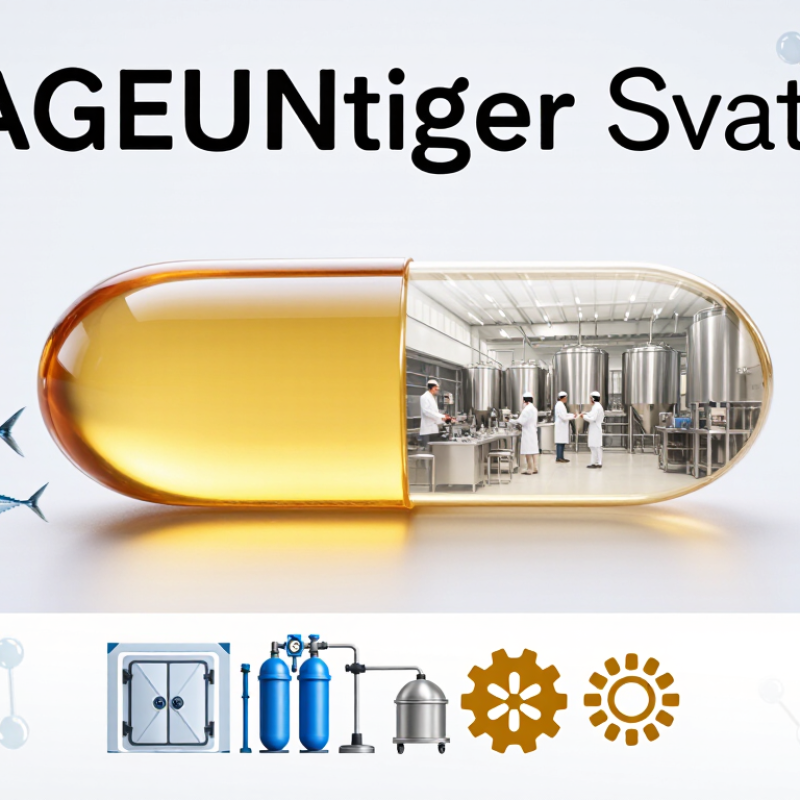
Choosing a fish oil softgel manufacturer in 2026 starts with production requirements, not attractive sales materials. A capable facility should explain its raw material controls clearly. Ask about fish species, harvest region, supplier approval, and lot traceability. Each batch should have documented identity, purity, and freshness results. Numbers matter.
Oxidation control is essential because fish oil can degrade during processing and storage. Testing should include peroxide value, anisidine value, and total oxidation indicators. A reliable laboratory also checks heavy metals, environmental contaminants, and microbiological risks. Softgel production requires accurate fill weight, secure seals, controlled moisture, and clean equipment. Stability studies should reflect the intended market and packaging. Dark, oxygen-resistant containers can protect sensitive oil. Small details matter.
Review the manufacturer’s quality system, training records, deviation reports, and corrective actions. Current GMP-based procedures, validated cleaning, and calibrated instruments provide stronger evidence than certificates alone. The manufacturer should map requirements to each destination market, since labeling and testing rules can differ. Request retained samples and examine them after storage. A factory audit may reveal practical problems, such as crowded quarantine areas or unclear material labels. No supplier is perfect. Even a strong checklist can miss a weak handover between teams. That deserves a careful question.
How to Choose a Fish Oil Softgel Manufacturer in 2026?
Raw material quality should guide your decision. Ask where the fish oil comes from, which species are used, and how the supply chain is tracked. Responsible sourcing records should connect each lot to its origin, landing date, and processing site. Freshness matters. Fish oil can oxidize during transport or storage. A reliable manufacturer should test peroxide value, anisidine value, and total oxidation value. These results reveal whether the oil remains stable. A certificate alone is not proof. Request recent batch records and independent laboratory reports.
Omega-3 potency must be measured by actual EPA and DHA content, not total fish oil weight. Check the amount per serving and confirm it matches the product specification. Ask whether the oil uses triglyceride, re-esterified triglyceride, or ethyl ester forms. The choice affects formulation and absorption considerations. Testing should also cover heavy metals, environmental contaminants, microbial safety, and capsule integrity. Clear methods matter. Vague numbers create doubt. I would compare several batches, because one strong result may hide inconsistent production.
Tips: Request a sample COA, testing method, and retest date. Check oxidation results before approving the formula. Smell the softgels; a strong rancid odor deserves investigation. Confirm storage conditions, packaging barriers, and temperature controls. Do not rely only on marketing language. Even experienced buyers can miss small gaps, especially when documents look polished. Recheck the evidence.
How to Choose a Fish Oil Softgel Manufacturer in 2026?
A reliable manufacturer should document GMP compliance, traceability, sanitation, and batch controls. In the United States, FDA 21 CFR Part 111 requires written specifications, testing, and production records for dietary supplements. Ask to inspect the current certificate, not a copied PDF. FSSC 22000 or ISO 22000 certification can strengthen food-safety oversight, but certification alone does not guarantee fresh oil.
Testing must cover identity, potency, oxidation, and contaminants. The GOED Voluntary Monograph sets useful industry benchmarks: peroxide value should remain at or below 5 meq/kg, p-anisidine at or below 20, and TOTOX at or below 26. Request independent laboratory results for every batch. The report should show EPA and DHA levels, heavy metals, dioxins, PCBs, and microbial results. Check the lot number against the delivered softgels. Small details matter.
Tips: Ask for a recent certificate of analysis and raw-material origin. Confirm the laboratory’s accreditation, preferably ISO/IEC 17025. Review softgel leakage tests and stability data under heat and humidity. During factory visits, inspect sealed drums, oxygen control, and temperature logs. I once trusted a polished certificate too quickly; that was a mistake. A strong supplier welcomes difficult questions and provides evidence without hesitation.
| Evaluation Dimension | What a Qualified Manufacturer Should Demonstrate | Documents or Records to Request | Key Verification Points | Priority | Potential Warning Sign |
|---|---|---|---|---|---|
| GMP Compliance | Manufacturing operations should follow applicable food, dietary supplement, or pharmaceutical good manufacturing practice requirements for the target market. | Current GMP certificate, regulatory inspection record, quality manual, and corrective-action history where available. | Confirm the certificate scope covers fish oil softgels, the stated facility address, and the products being evaluated. | Critical | A certificate is provided without a scope, issuing body, validity date, or facility address. |
| HACCP and Food Safety | A documented hazard analysis should address biological, chemical, physical, and allergen-related risks throughout receiving, processing, encapsulation, and packing. | HACCP plan, food-safety certificate, process-flow diagram, sanitation procedures, and internal audit records. | Check whether the plan specifically covers oxidation, contaminants, cross-contamination, and temperature control. | Critical | The program is generic and does not identify risks specific to marine oils. |
| Raw-Material Traceability | Each oil lot should be traceable from the source and supplier through refining, storage, encapsulation, and finished-product release. | Supplier approval records, lot-traceability procedure, chain-of-custody documents, and mock-recall results. | Ask the manufacturer to demonstrate one-step-back and one-step-forward traceability using a sample lot number. | Critical | The manufacturer cannot link a finished softgel lot to its raw-oil batch. |
| Species and Sustainability | The manufacturer should identify the fish species, harvest area where applicable, source fishery or aquaculture origin, and supply-chain controls. | Species declaration, supplier specification, fishery documentation, sustainability certification where claimed, and mass-balance records if applicable. | Verify that sustainability claims are supported by a recognized certification or transparent, auditable sourcing records. | High | The product is described only as “premium marine oil” without species or sourcing information. |
| Purity and Environmental Contaminants | Testing should address heavy metals and relevant persistent organic pollutants, including dioxins, furans, and polychlorinated biphenyls when applicable. | Lot-specific certificate of analysis, laboratory reports, test methods, detection limits, and regulatory-limit comparison. | Confirm that results are quantitative where appropriate and that the laboratory is qualified for the stated methods. | Critical | Only a general “pass” statement is supplied without analyte results or test limits. |
| Oxidation Control | The oil should be protected from heat, oxygen, light, and prolonged storage; oxidation should be assessed using primary and secondary oxidation indicators. | Peroxide value, anisidine value, and calculated total oxidation value where applicable; storage and nitrogen-flushing records. | Compare results with the finished-product specification and the applicable recognized monograph or market requirement. | Critical | The manufacturer tests only peroxide value and provides no secondary-oxidation data. |
| EPA and DHA Assay | The declared amounts of EPA and DHA should be confirmed by a validated quantitative method for each relevant production lot or according to a justified testing plan. | Finished-product certificate of analysis, method reference, chromatographic results, and approved product specification. | Check whether the declared value is per softgel, serving, or daily dose and whether tolerances are clearly defined. | Critical | The label claim is based only on the raw-material specification and not verified in the finished softgel. |
| Microbiological Safety | Finished softgels and relevant raw materials should be assessed for applicable microbial hazards using defined specifications. | Microbiological test report, sampling plan, environmental-monitoring program, and sanitation records. | Review the organisms tested, sample size, release limits, and response procedure for an out-of-specification result. | High | Testing is performed only occasionally without a documented sampling rationale. |
| Allergen and Cross-Contact Controls | Controls should identify fish allergens, manage shared equipment, and support accurate labeling for the destination market. | Allergen-control plan, cleaning-validation records, label review, and supplier allergen declarations. | Confirm that the fish source and any additional ingredients are reflected accurately in the finished-product label. | High | The facility cannot explain shared-line cleaning or allergen-label verification. |
| Softgel Manufacturing Controls | Critical parameters such as fill weight, gelatin or vegetarian-shell composition, seal integrity, moisture, appearance, and leakage should be controlled. | Master manufacturing record, in-process inspection records, fill-weight data, leak-test procedure, and finished-product specification. | Verify that the manufacturer can consistently meet shell dimensions, dosage uniformity, and packaging requirements. | High | There are no documented in-process checks or acceptance criteria for seal integrity. |
| Packaging and Stability | Packaging should protect the oil from oxygen, moisture, heat, and light, with shelf life supported by stability data. | Packaging specification, compatibility assessment, accelerated and real-time stability protocols, and storage-condition data. | Check whether the proposed container, closure, desiccant, and oxygen-control system match the claimed shelf life. | High | Shelf life is assigned without stability results for the proposed packaging configuration. |
| Independent Laboratory Testing | Critical tests should be performed by a competent laboratory using validated or recognized methods; independence should be clear where appropriate. | Laboratory accreditation evidence, scope of accreditation, method validation or verification summary, and original reports. | Ensure the laboratory’s scope includes the specific matrix and analytes being tested, not merely unrelated tests. | High | The report lacks the laboratory identity, method, sample identification, or authorized approval. |
| Regulatory and Label Support | The manufacturer should support compliant ingredient statements, nutrition or supplement facts, claims substantiation, and market-specific documentation. | Technical dossier, specification sheet, label review, allergen statement, non-GMO or other claim documentation where applicable. | Confirm that every marketing claim is supported and permitted in the intended sales jurisdiction. | High | Marketing claims are offered without documented substantiation or regulatory review. |
| Quality Agreement and Change Control | A written agreement should define specifications, responsibilities, deviation handling, complaint management, recalls, and notification of material changes. | Quality agreement template, change-control procedure, deviation and CAPA procedure, complaint log format, and recall plan. | Check whether changes to the oil source, formulation, process, packaging, or testing laboratory require prior approval. | High | The manufacturer may change suppliers or specifications without notifying the buyer. |
| Batch Release and Data Integrity | Each batch should be released by an authorized quality function after review of manufacturing and testing records. | Batch-release checklist, approved certificate of analysis, electronic-record controls, and authorized quality-release signature. | Verify that raw data are attributable, legible, contemporaneous, original, accurate, and protected from unauthorized alteration. | Critical | Only a sales-prepared certificate is available and no quality-release process can be shown. |
| Audit and Supplier Qualification | The manufacturer should permit a documented qualification audit, remote assessment, or suitable third-party audit before commercial approval. | Audit questionnaire, recent audit report, CAPA responses, supplier-qualification procedure, and approved-supplier list. | Assess whether corrective actions are specific, completed, and verified for effectiveness. | Standard | The facility refuses reasonable quality audits or will not share a redacted audit summary. |
| Production Capacity and Continuity | Capacity, lead time, minimum order quantity, backup suppliers, and business-continuity arrangements should match the buyer’s forecast. | Capacity statement, production schedule, continuity plan, inventory policy, and documented lead-time assumptions. | Separate validated capacity from theoretical capacity and confirm seasonal supply risks for marine oils. | Standard | The quoted capacity is not supported by equipment, staffing, or production records. |
Production capacity should mean more than impressive annual figures. Ask how many softgel lines operate daily, and whether the facility can maintain stable output during peak seasons. Request recent batch records, testing procedures, and traceability examples. A reliable manufacturer should explain its controls for oxidation, purity, fill weight, and capsule integrity. Cold storage and controlled handling also matter. Fish oil quality can decline before encapsulation if temperature management is weak.
Customization reveals practical experience. Discuss EPA and DHA ratios, capsule size, flavor options, dosage strength, and minimum order quantities. Confirm whether pilot batches are available before a full launch. A small trial can expose problems with taste, leakage, or swallowing comfort. Do not accept vague promises. Ask for timelines, formulation limits, and sample approval steps. Sometimes, too many options create delays. That deserves honest discussion.
Packaging protects the product after production. Compare opaque bottles, blister packs, and high-barrier pouches based on shipping conditions and target usage. Ask whether the packaging limits light and oxygen exposure. Check seal testing, tamper evidence, lot coding, and label accuracy. Nitrogen flushing may help, but it is not a substitute for sound storage practices. A polished factory tour can still miss weak packaging controls. Review samples from actual production, not only presentation units. Mistakes happen. The right partner explains them, corrects them, and documents the response.
Cost should be measured beyond the quoted softgel price. Compare the cost per gram of verified EPA and DHA, not just oil weight. Include testing, packaging, freight, minimum order quantities, and payment terms. FAO’s The State of World Fisheries and Aquaculture 2024 recorded 185.4 million tonnes of global aquatic animal production in 2022. Supply scale does not guarantee stable pricing. Weather, quotas, fuel, and freight can still affect each batch. Ask for a 12-month pricing model with clear adjustment triggers.
Cheap offers often hide expensive uncertainty.
Communication is a manufacturing control, not a courtesy. Request replies within one business day and written deviation notices. Review sample approval records, certificates of analysis, oxidation results, and EPA/DHA assay methods.
GOED’s technical guidance emphasizes quality controls for oxidation, purity, and traceability. A serious supplier should also explain its peroxide value, anisidine value, and TOTOX limits in plain language.
Avoid vague promises. They age badly.
Check three years of batch records, corrective-action reports, recall procedures, and change-control logs. FDA dietary supplement current good manufacturing practices require documented specifications and production controls under 21 CFR Part 111. That is only the baseline.
FAO’s 2024 report also highlights continuing pressure on aquatic resources, making responsible sourcing and backup supply planning increasingly important.
No checklist is perfect. A missed packaging change can still disrupt delivery. Schedule quarterly reviews, retain reference samples, and test the manufacturer’s response before a real crisis occurs.
Ask which fish species are used and where they were landed. Each lot should connect to its origin, landing date, and processing site. Traceability matters. I would also review backup suppliers, because one source can fail unexpectedly.
Request peroxide value, anisidine value, and total oxidation results. These tests show whether the oil has degraded. Recent batch records are more useful than a polished certificate alone. A strong smell deserves investigation.
Check the actual EPA and DHA amounts per serving. Do not judge potency by total fish oil weight. Compare the specification with independent laboratory results. One impressive batch proves little.
Ask whether the oil uses triglyceride, re-esterified triglyceride, or ethyl ester forms. The form can affect formulation choices and absorption considerations. Do not accept vague explanations. Details matter here.
Testing should cover heavy metals, environmental contaminants, and microbial safety. Request capsule integrity results and the testing methods used. Check the retest date carefully. Small gaps can become expensive problems.
Compare the cost per gram of verified EPA and DHA. Include testing, packaging, freight, minimum orders, and payment terms. Ask for a twelve-month pricing model with clear adjustment triggers. Cheap quotes may hide uncertainty.
Request replies within one business day and written deviation notices. Review sample approvals, certificates, oxidation results, and assay methods. The supplier should explain testing limits in plain language. Promises age badly.
Review three years of batch records, corrective actions, recalls, and change-control logs. Schedule quarterly reviews and retain reference samples. Test the supplier’s response before a real crisis. No checklist catches everything.
Choosing the right fish oil softgel manufacturer in 2026 requires more than comparing prices. First, clearly define your product requirements, including the target omega-3 content, dosage form, serving size, flavor, stability, and intended market. During supplier evaluation, examine the quality and traceability of raw materials, including the source, freshness, purification process, and verified EPA and DHA potency. A reliable partner should provide consistent test results for purity, oxidation, heavy metals, contaminants, and microbiological safety.
Strong Fish Oil Softgel Manufacturing capabilities should be supported by appropriate production standards, quality systems, certifications, and transparent documentation. Compare each manufacturer’s production capacity, minimum order quantities, formulation support, softgel sizes, packaging options, labeling assistance, and ability to scale. Finally, assess the total cost rather than unit price alone, including testing, packaging, logistics, and development fees. Clear communication, responsive service, realistic delivery schedules, and a proven commitment to continuous quality improvement are essential for building a dependable, long-term manufacturing relationship.