Choosing a capsule manufacturer is not a box-ticking exercise. The right partner can help protect product consistency, ingredient integrity, and delivery timelines. The market is growing quickly: Grand View Research estimated the global dietary supplements market at USD 177.5 billion in 2023, with projected growth through 2030. That scale brings more supplier choices—and more reason to verify claims.
Custom Capsule Supplement Manufacturing involves decisions beyond capsule size and color. Ask how a facility qualifies suppliers, controls moisture, documents batch records, and handles out-of-specification results. Request relevant audit documentation and independent testing records. A polished sample is useful. Traceability is better. Still, paperwork alone cannot prove day-to-day performance.
A practical evaluation should compare technical capability, communication, minimum order quantities, lead times, and quality systems. Confirm which services are performed in-house and which are outsourced. Details matter. A delayed test result or unclear change-control process can disrupt a launch. The U.S. FDA explains that dietary supplement manufacturers must follow current good manufacturing practice requirements; readers should review the agency’s guidance directly when assessing a supplier.
Expert quotations should be verified against a primary source before publication. Without a confirmed, attributable statement from a named manufacturing expert, inventing a quotation would undermine trust. Use this guide to ask sharper questions, examine evidence, and choose a partner whose answers hold up under scrutiny.
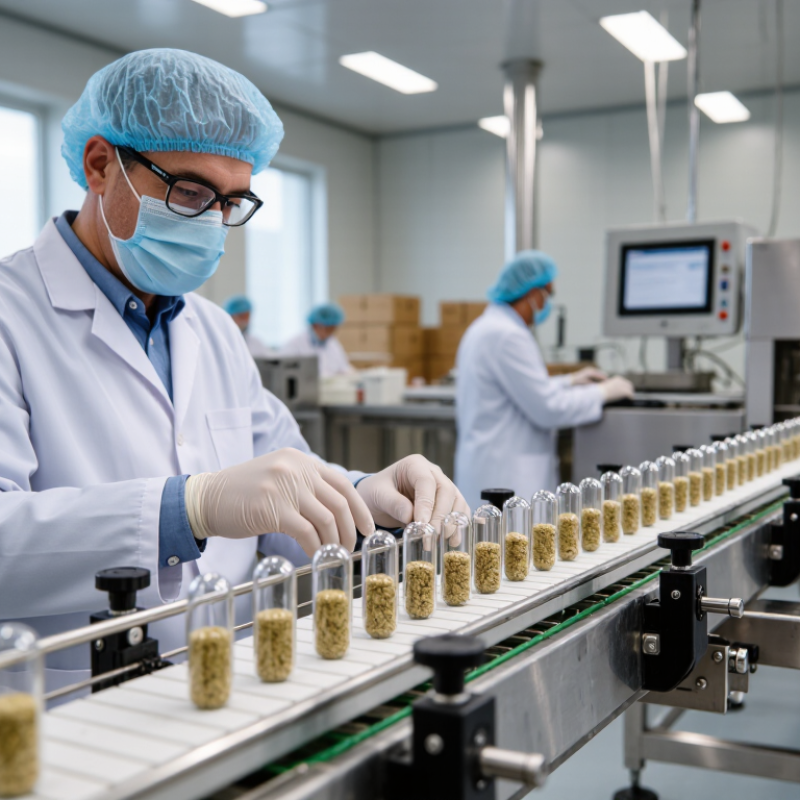
Choosing a custom capsule supplement manufacturer starts before the quote. Write the formula, serving size, daily dose, and target capsule count. A vague request such as “high potency” invites mismatched assumptions. Grand View Research estimated the global dietary supplements market at USD 177.5 billion in 2023, increasing pressure to launch quickly. Speed, however, can hide costly formulation decisions. A practical worksheet is safer than an attractive concept.
List each active ingredient in milligrams per serving. State extract ratios, standardization markers, allergens, flow requirements, and permitted excipients. Then test the physical fit. Capsule size 000 holds more powder than 00, but density changes the actual fill weight. Moisture and compression can change it again. Ask for a development sample and a written overfill rationale. Do not accept “standard dose” without evidence. The 2023 Council for Responsible Nutrition Consumer Survey reported supplement use among 74% of U.S. adults, yet popularity does not prove a dose is appropriate.
Your request for quotation should specify capsule shell material, size, servings, batch quantity, packaging, testing, and documentation. Require identity, potency, microbiological, and contaminant testing. FDA 21 CFR Part 111 requires manufacturers to establish specifications and follow current good manufacturing practice controls. Ask for recent certificates of analysis, not promises. One imperfect detail remains: the first capsule size may be wrong. Recheck blend density with the manufacturer before approving tooling, pricing, or a production schedule.
| Formula Planning Item | Example Specification | Typical Planning Range or Fact | Why It Affects the Quote | Information to Confirm Before Requesting Quotes |
|---|---|---|---|---|
| Active ingredients | Vitamin C, magnesium, botanical extract, or amino acid | List each ingredient separately with its target amount per serving | Ingredient cost, testing requirements, powder density, and processing compatibility vary significantly | Exact ingredient name, source, specification, standardization, and required potency |
| Serving size | 2 capsules per serving | Common capsule products use 1–4 capsules per serving, depending on total fill weight | Changes the capsule count per bottle, packaging volume, label directions, and production calculation | Target serving size and maximum acceptable number of capsules per day |
| Total fill weight | 800 mg per serving divided into 2 capsules | Calculate the sum of active ingredients plus excipients; actual weight depends on formulation design | Determines capsule size, machine settings, raw-material usage, and expected yield | Target milligrams per serving and whether excipients or flow agents are permitted |
| Powder density | Low-density botanical powder versus dense mineral powder | Capsule capacity is approximate because bulk density and flowability differ by material | The same capsule size may hold different weights for different formulas | Provide a sample or technical data sheet when available; request a trial fill if the formula is dense or cohesive |
| Capsule size | Size 00 for a moderate powder fill | Common sizes include 000, 00, 0, 1, 2, 3, and 4; size 000 is largest and size 4 is smallest | Affects swallowing comfort, capsule material usage, bottle count, and consumer positioning | Preferred size, acceptable alternatives, and whether the manufacturer may recommend a different size |
| Approximate capsule capacity | Size 00: approximately 600–750 mg for many powders | Typical estimates: 000: 800–1,200 mg; 00: 600–750 mg; 0: 400–600 mg; 1: 300–400 mg; 2: 200–300 mg | Capacity estimates guide the initial design but cannot replace a formulation or production trial | Ask for the tested fill weight for the specific formula rather than relying only on nominal capsule size |
| Capsule material | Hard gelatin or vegetarian HPMC | Hard capsules are commonly made from gelatin or hypromellose (HPMC) | Material choice affects compatibility, product positioning, storage requirements, and unit cost | Required capsule material, dietary restrictions, color, opacity, and printing needs |
| Dosage form requirements | Immediate-release powder capsule | Capsules may require powder blending, granulation, or other processing steps depending on flow and uniformity | Additional development and processing steps can increase lead time and cost | Target release profile, moisture sensitivity, heat sensitivity, and ingredient compatibility |
| Quality and testing | Identity, potency, microbiological, heavy-metal, and stability testing as applicable | Testing should be matched to the ingredients, market, formula risk, and finished-product specifications | Laboratory work, certificates, specifications, and release procedures influence total project cost | Required test panel, acceptance limits, documentation, and destination-market compliance needs |
| Packaging configuration | 60 capsules in a bottle with a desiccant and induction seal | Bottle count, closure, seal, desiccant, label, and carton are separate quote variables | Packaging components and filling operations can materially change the unit price | Capsules per container, packaging material, artwork responsibility, and required shelf-life protection |
| Order and delivery requirements | Initial order of 10,000 finished units with a target launch date | Minimum order quantities and lead times vary by formula complexity, packaging, testing, and production schedule | The manufacturer must estimate raw-material purchasing, setup, production, testing, and packaging capacity | Expected order quantity, repeat-order forecast, delivery location, launch date, and acceptable production window |
It should confirm species, source, strength, and possible substitutions. Ask for batch-specific results before production. Paperwork is not proof.
Request current specifications, allergen statements, origin details, audit records, and traceability documents. Match lot codes, dates, and quantities against the shipment.
Ask for USP <905> testing, the sampling plan, calculation method, and raw data. The initial Acceptance Value should generally be no more than 15.0.
Check whether capsules came from different production stages. Ask whether the test method suits your formula. Powder flow, moisture, and machine speed can affect results.
No. Review blend uniformity, fill-weight checks, cleaning records, and retained samples too. A passing number has limits.
Ask about identity testing, assay results, microbial limits, heavy metals, and pesticide testing when relevant. Review laboratory qualifications and sample handling.
Follow one batch through raw-material lots, test results, equipment logs, operators, and retained samples. Request a mock recall and ask how quickly affected lots can be identified.
Define specifications, release authority, investigations, deviations, changes, complaints, recalls, audits, and notification timelines. Clarify who approves supplier changes and owns stability data. Vague wording can be costly.
Choosing the right partner for Custom Capsule Supplement Manufacturing begins with clearly defining your formula, serving size, dosage, and preferred capsule size before requesting quotations. A detailed specification helps manufacturers provide accurate pricing, identify production requirements, and reduce the risk of delays or reformulation. It is also important to confirm that the facility follows FDA dietary supplement Good Manufacturing Practices under 21 CFR Part 111, including documented procedures, sanitation controls, and batch release standards.
Before signing a contract, review how each ingredient is verified and whether supplier documentation is maintained for every batch. Ask about identity testing, certificates of analysis, traceability, retention samples, and deviation handling. Finished capsules should also be evaluated for quality and dose consistency according to applicable USP <905> uniformity criteria, including an acceptance value of no more than 15.0 when appropriate. Finally, compare testing capabilities, quality agreements, communication processes, and record access to select a manufacturer that supports consistent, transparent, and reliable production.