0%

Selecting a Vitamin Tablet Manufacturing Service involves more than comparing prices or browsing product photos. The right partner should be able to explain its formulation options, tablet sizes, coating choices, and production capacity in clear terms. Details matter. A buyer may need a small pilot run, a particular bottle size, or packaging that protects tablets from moisture. These practical needs can affect cost, lead time, and product quality.

This guide introduces ten manufacturing services for global buyers and offers a starting point for comparison, not a universal ranking. It considers capabilities such as ingredient sourcing, quality checks, stability testing, packaging support, and communication during production. Buyers should also ask which certifications apply to the facility and verify their current scope directly. Not every supplier fits. Export experience can be useful, but requirements differ by destination and product. A polished brochure is not proof of a reliable process; request relevant documentation and discuss how deviations are handled. Even a capable factory may not suit every launch. Minimum order quantities, testing arrangements, and timelines deserve careful review before a decision. This overview can help narrow the field, while leaving room for questions that only a specific project can answer.
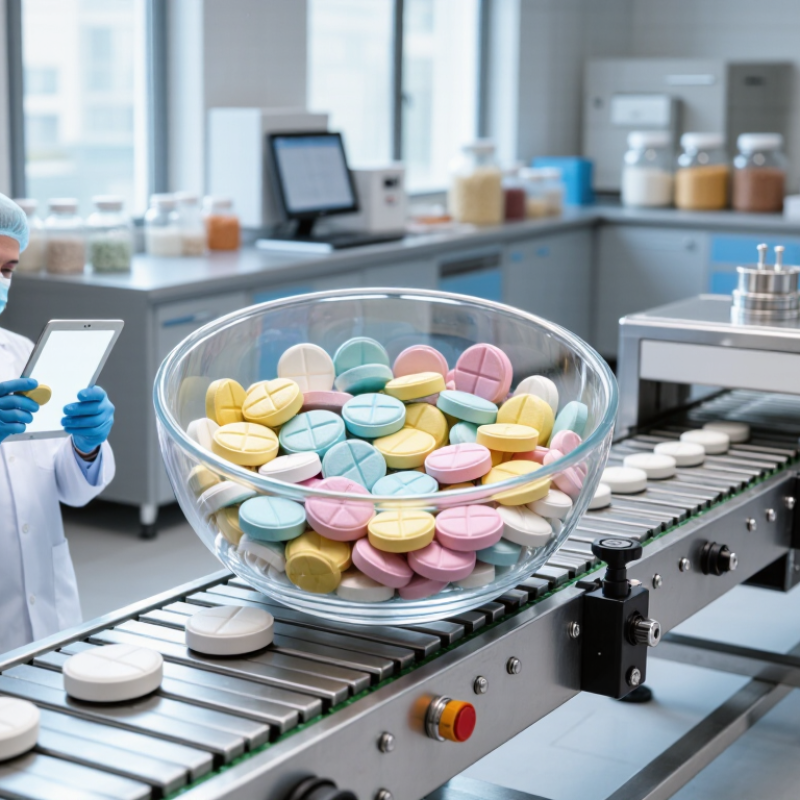
Top 10 Vitamin Tablet Manufacturing Services for Global Buyers

Understanding Vitamin Tablet Manufacturing Services

Vitamin tablet manufacturing services can cover formulation support, ingredient sourcing, blending, compression, coating, testing, and packaging. The exact scope varies by provider. Some teams work from a finished formula, while others help adjust tablet size, flavor, or ingredient levels for production. Ask who approves each change and how revisions are recorded.

Quality checks may include ingredient identity, tablet weight, hardness, and disintegration time. Request details about sampling, test methods, and records—not just a general quality statement. Details matter. A tablet that looks consistent may still vary in how it breaks down. Testing plans should match the product and the requirements of its intended markets.

Before production, buyers can compare minimum order quantities, lead times, packaging options, and how issues are reported. A pilot batch may reveal problems with flow, compression, or coating before a larger run. Small gaps persist. For example, a specification may name a color but omit an acceptable shade range. Even a capable manufacturer cannot resolve unclear expectations without discussion. Define responsibilities in writing, then review the documents and sample tablets carefully.

Top 10 Vitamin Tablet Manufacturing Services for Global Buyers

A key quality-control consideration: allowable tablet mass variation under European Pharmacopoeia criteria.

The chart shows the permitted percentage deviation from average tablet mass for three mass ranges under European Pharmacopoeia mass-uniformity criteria. These limits are a quality-control reference, not a universal product specification; applicable requirements depend on the product and target market.

How the Top 10 Providers Are Evaluated

Evaluating the top ten vitamin tablet manufacturing services requires more than comparing quoted prices. Buyers should examine documented quality systems, batch traceability, ingredient verification, and in-process checks. Ask how teams monitor blend uniformity, tablet weight, hardness, and moisture-sensitive materials. These details help reveal whether a provider can reproduce results across production runs. Request recent audit summaries and sample batch records, with confidential information protected. Paperwork matters.

Production fit matters, too. Confirm minimum order quantities, available tablet formats, packaging options, and realistic lead times. A capable provider should explain how it handles formulation changes, scale-up trials, and out-of-specification results. Check whether testing is performed in-house or by an independent laboratory, and clarify which records buyers receive. Compare answers using the same questions. No scorecard is perfect; a polished presentation may not reflect day-to-day performance. I would also note when a provider gives vague answers, even if its price is attractive.

Tips: Request a small pilot run when practical. Review tablets for consistent shape, coating, and packaging seals. Ask who handles quality questions after delivery, and record response times during evaluation.

Top 10 Vitamin Tablet Manufacturing Services for Global Buyers - How the Top 10 Providers Are Evaluated

Evaluation framework for comparing manufacturing services. The weights are an editorial screening model, not verified ratings or rankings of individual providers. Buyers should confirm current documentation and market-specific requirements directly with each manufacturer.

Evaluation dimension Weight Evidence to review Why it matters to global buyers
1. Manufacturing quality systems 18% Current audit records, documented quality procedures, deviation and corrective-action processes, and relevant certifications. For U.S.-bound dietary supplements, check alignment with 21 CFR Part 111. A documented quality system supports consistent production and traceable handling. Certifications and regulatory obligations vary by product and destination market.
2. Testing and batch documentation 15% Representative certificates of analysis (CoAs), test methods, batch records, and details on identity, strength, purity, and contaminant testing where applicable. Clear, batch-specific records help buyers verify product specifications and investigate quality issues. Confirm which tests are performed in-house or by external laboratories.
3. Regulatory and export support 12% Ability to provide product specifications, ingredient documentation, manufacturing information, and label-review support for the intended destination market. Rules for supplements, permitted ingredients, claims, and import documentation differ across countries. The importer remains responsible for confirming local compliance.
4. Formulation and development capability 10% Access to formulation support, feasibility review, ingredient compatibility assessment, prototype development, and documented change control. Vitamin formulas may require attention to ingredient stability, tablet size, taste, and manufacturing compatibility before commercial production.
5. Tablet dosage-form capabilities 10% Available tablet formats and options, such as coated or uncoated tablets, tablet dimensions, scoring where feasible, and validated production controls. A close match between equipment capabilities and product requirements can reduce reformulation, production, and packaging constraints.
6. Ingredient sourcing and traceability 10% Supplier qualification procedures, ingredient specifications, lot traceability, origin information where available, and controls for incoming materials. Traceability helps buyers assess supply continuity and respond to quality or recall concerns across the supply chain.
7. Production capacity and minimum order quantities 8% Written information on minimum order quantities, available production scale, capacity allocation, and expected scheduling assumptions. Order-size and capacity fit affect unit economics, launch planning, and the ability to replenish inventory. Confirm details for the specific product and production window.
8. Packaging and labeling options 7% Available bottle, blister, or other packaging formats; label application capability; packaging specifications; and compatibility with the buyer’s market requirements. Packaging protects the product and affects shelf presentation, shipping, and label compliance. Confirm material options and who approves final artwork.
9. Lead-time and delivery planning 5% A documented production timeline covering material procurement, sampling or approval steps, manufacturing, packaging, and shipment handoff. A realistic schedule helps buyers coordinate launches and inventory. Actual timing can change with formulation, order volume, material availability, and destination.
10. Communication and commercial transparency 5% Clear quotations, defined project responsibilities, responsive technical communication, change-notification procedures, and written terms for samples and production. Transparent communication makes it easier to compare proposals, manage changes, and resolve questions during development and ongoing supply.
Total evaluation weight 100% Compare providers using the same product brief, destination markets, and evidence requirements.

Profiles of 10 Vitamin Tablet Manufacturing Services

Formulation development services help buyers turn a nutrient brief into a tablet specification. They can advise on ingredient compatibility, tablet size, and flow. Ask how pilot batches are reviewed. Details matter.

Custom compression services focus on tablet shape, weight, hardness, and production consistency. Private-label services pair manufacturing with label and packaging coordination, while high-volume producers are suited to repeat orders and larger runs. Small-batch services allow buyers to assess samples before committing to broader production. Pilot runs can reveal issues that a polished sample hides.

Chewable-tablet services address flavor, texture, and breakage during shipping. Coated-tablet services apply protective or appearance-focused finishes, depending on the formulation. Nutrient-blend specialists handle combinations that may require careful ingredient and process checks. Packaging services offer options such as bottles, seals, and moisture barriers; confirm their fit for the product. Testing and documentation services may provide batch records and laboratory results. Buyers should verify which checks are performed in-house and which are contracted. A service profile can sound complete, yet one important detail may still be missing: how deviations are handled.

Formulation, Production, and Customization Capabilities

Vitamin tablet manufacturing services differ in formulation depth, production controls, and customization options. For global buyers, the process should begin with clear product requirements: target nutrients, tablet size, flavor, and intended serving amount. A formulation team can assess ingredient compatibility, flow, and compression behavior. These details affect whether tablets hold their shape or crumble during handling. Small choices matter.

Production capabilities deserve equally close review. Ask how batches are monitored, how raw materials are identified, and what records accompany finished products. Reliable providers should explain their quality checks in plain language and share relevant documentation for review. Customization may cover tablet shape, coating, packaging format, and label layout, depending on the facility. Still, a polished brochure can leave practical gaps. Request specifics about minimum order quantities, sample timelines, and how changes are approved. A sample may look right but feel too large to swallow; that feedback can require another production round.

Tips: Send a written product brief, including target markets and packaging needs. Request a sample and review its size, surface, and handling. Keep one question open: what happens if the first formulation misses the brief?

Quality Standards and Selection Criteria for Global Buyers

Top 10 Vitamin Tablet Manufacturing Services for Global Buyers

Quality Standards and Selection Criteria for Global Buyers

Choosing a vitamin tablet manufacturer takes more than comparing price and production capacity. Ask how the facility controls raw materials, blending, compression, and packaging. Request current quality certificates, product specifications, and batch-specific certificates of analysis. Check that test methods cover identity, strength, and relevant contaminants. Details matter. A certificate is useful, but it does not answer every question about daily quality practices.

Tips: Ask for a sample batch record and a clear explanation of how deviations are investigated. Confirm whether stability data supports the proposed shelf life and packaging. Ask how suppliers are qualified and how ingredient lots can be traced. Keep the answers in writing.

A practical evaluation may include a facility audit, where available, and a review of complaint handling and product-release procedures. Check whether the manufacturer can provide consistent documentation for the markets you serve, since requirements vary by destination. Compare lead times and minimum order quantities, too; a technically capable supplier may still be a poor fit. No checklist catches everything. Revisit the criteria after the first production run, and note where your own assumptions proved weak.

FAQS

What should I ask about formulation development?

Ask how ingredients work together, how tablet size is chosen, and how pilot batches are reviewed. Details matter.

Why request a pilot batch?

It can reveal problems that a polished sample hides, such as inconsistent flow or breakage. A sample alone is not enough.

What quality documents should I review?

Request current quality certificates, product specifications, and batch-specific certificates of analysis. Check that tests cover identity, strength, and relevant contaminants.

How can I check a manufacturer’s daily quality practices?

Ask for a sample batch record and an explanation of deviation investigations. A certificate does not show every routine check.

What should I confirm about shelf life and packaging?

Ask whether stability data supports the proposed shelf life and packaging. Check that bottles, seals, and moisture barriers suit the product.

How can I compare production services?

Match the service to your needs, such as chewable tablets, coatings, small batches, or repeat orders. Check minimum quantities and lead times, too.

What should I ask about testing and documentation?

Confirm which checks happen in-house and which are contracted. Ask how ingredient lots are traced and what records are supplied.

Is a facility audit enough to assess a supplier?

No. Review complaint handling, product-release procedures, and documentation for your destination markets. I might still miss something; revisit your criteria after the first run.

Conclusion

This article explores what a Vitamin Tablet Manufacturing Service can offer global buyers, from early-stage formulation support to large-scale production and product customization. It explains how manufacturers may help develop tablet formats, select suitable ingredients, refine taste and texture, and adapt products to different market needs. It also outlines the criteria used to compare ten types of service providers, including technical capabilities, production flexibility, communication, and the ability to support projects from concept through delivery.

The profiles highlight how manufacturing services can differ in expertise, capacity, and customization options. The article also reviews quality standards and practical selection considerations, such as documentation, testing procedures, production controls, and clear project timelines. By considering these factors together, buyers can better assess potential partners, ask informed questions, and choose a service that aligns with their product goals, quality expectations, and supply requirements.


Alexander

Alexander

Alexander is a professional marketing specialist with extensive experience in developing clear, effective communication strategies for technology-driven products and customer-focused services. As a key member of the company’s marketing team, he combines market research, product knowledge, and......