1. The Evolving Landscape of Oral Solid Dosage (OSD) Nutraceutical Manufacturing
The global dietary supplement market is experiencing a structural shift driven by heightened consumer demand for verifiable product efficacy, clean-label transparency, and innovative delivery mechanisms. As brands navigate increasingly complex global regulatory environments—such as Health Canada's Natural Health Product Regulations, US FDA cGMP (21 CFR Part 111), and EU EFSA directives—partnering with an established, technically competent OEM/ODM supplier becomes the foundational pillar of commercial success.
Tablet compression remains the gold standard in Oral Solid Dosage (OSD) manufacturing due to its unmatched stability, precise dosage uniformity, cost efficiency, and versatile modification capabilities (e.g., modified-release, effervescent dissolution, chewable palatability). However, successful international commercialization requires overcoming sophisticated powder metallurgy challenges, moisture sensitivity issues, active ingredient degradation, and regional market compliance hurdles.
Information Gain Insight: Modern OEM/ODM tablet manufacturing is no longer merely about dry blending and tableting. It demands advanced chemical engineering—matching stoichiometric ratios in effervescent systems, utilizing microencapsulation for vulnerable micronutrients, and implementing high-speed direct compression to prevent thermal degradation of sensitive vitamins like C, B12, and D3.
This whitepaper provides procurement directors, brand owners, and pharmaceutical importers with an authoritative technical analysis of custom vitamin tablet manufacturing, emerging formulation architecture, strategic sourcing trends, and quality assurance framework required to dominate modern market channels.
Achieving optimal bioavailability, shelf-life stability, and consumer compliance requires tailored compression kinetics and binder selection. Our contract manufacturing infrastructure supports four specialized tablet architectures:
A. Effervescent Tablet Kinetics (Acid-Base Stoichiometry)
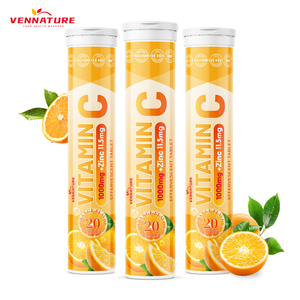
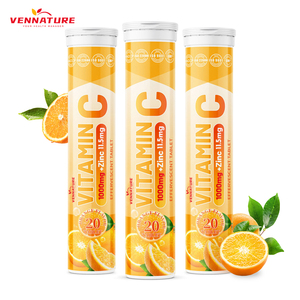
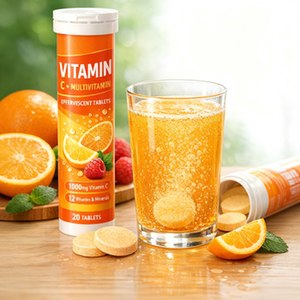
Effervescent formulations offer rapid gastrointestinal absorption, superior buffering capacity, and enhanced consumer hydration compliance. The core mechanics rely on an anhydrous organic acid (such as Citric Acid, Tartaric Acid, or Malic Acid) reacting with an alkali carbonate or bicarbonate (Sodium Bicarbonate, Potassium Bicarbonate, or Carbonate salts) upon water immersion to liberate Carbon Dioxide ($CO_2$).
To prevent premature effervescence during processing and storage, manufacturing must occur within dedicated cleanrooms controlled at under 20% Relative Humidity (RH) and $21^\circ\text{C}$. Advanced desiccant packaging, such as air-tight aluminum tubes equipped with molecular sieve caps, is essential to preserve tablet integrity across export shipping routes.
B. High-Potency Chewable Tablets
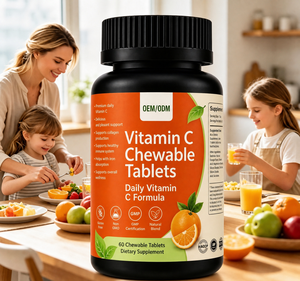
Formulating chewable tablets requires balancing organoleptic satisfaction (taste, texture, mouthfeel) with active nutrient potency. Using direct-compression sugar alcohols like D-Mannitol, Xylitol, and Sorbitol, our formulators achieve smooth dissolution without chalkiness, while microencapsulated minerals (Zinc Citrate, Magnesium Oxide) mask bitter or metallic off-notes.
C. Coated & Modified-Release Matrix Tablets
Enteric and film-coated tablets protect acid-sensitive vitamins from gastric breakdown or mitigate stomach discomfort caused by heavy mineral doses. Utilizing water-soluble film formers (such as HPMC or PVA-based coatings), we apply protective barriers that improve swallowability, mask odor, and shield hygroscopic cores from environmental humidity.
High-Dose B-Complex, Vitamin C 1000mg Time-Release
Multi-Layer Tablets
Cross-incompatibility of active ingredients
Dual-Chamber Rotary Compression Pressing
Multivitamin + Mineral Combos, Probiotic + Vitamin
3. Global B2B Procurement & Sourcing Trends (2025–2030)
Strategic buyers must align their supply chains with macro shifts in consumer behavior and regulatory frameworks. The key trends shaping the contract manufacturing of vitamin tablets include:
1. Clean-Label Excipient Substitution
Global retailers and consumers are actively demanding the removal of synthetic flow agents such as Titanium Dioxide ($TiO_2$), Magnesium Stearate, and Artificial Colorants. Advanced OEM manufacturing now utilizes organic rice extract blends, native tapioca starches, and natural beet or spirulina colorants to achieve high-speed tablet flowability without compromising clean-label credentials.
Mononutrition is increasingly replaced by clinically validated synergistic formulas. For instance, pairing Vitamin D3 with Vitamin K2 (MK-7) ensures proper calcium deposition into bones rather than vascular tissues. Similarly, pairing Vitamin C with Zinc and Chelated Magnesium amplifies cellular immune pathways while enhancing mineral bioavailability.
3. ESG & Sustainable Export Packaging
International buyers face increasing pressure regarding scope-3 carbon emissions and packaging waste. Sourcing trends favor recyclable aluminum effervescent tubes, lightweight PCR (Post-Consumer Recycled) plastic bottles, and plastic-free blister foils that reduce transit weight and environmental impact.
4. Supply Chain Resilience & Canadian Origin E-E-A-T
Geopolitical volatility and ocean freight disruptions have led global distributors to diversify away from single-source Asian manufacturing hubs. Sourcing from Health Canada site-licensed manufacturers guarantees high regulatory standards, stringent raw material qualification, and rapid customs clearance into North American, European, and Middle Eastern markets.
4. Institutional Advantage & E-E-A-T Capabilities
As a leading contract manufacturer headquartered in Ontario, Canada, our facility brings over 25 years of pharmaceutical-grade expertise to global private label brand partners.
Health Canada Site Licensed
Operates under full cGMP compliance with audited Quality Assurance protocols, guaranteeing identity, purity, and micro-limit compliance on every batch.
NPN & Regulatory Filing Support
In-house regulatory scientists manage Natural Product Number (NPN) applications, label claim compliance, and export documentation (CoA, Certificate of Free Sale).
35+ Global Export Destinations
Decades of experience navigating international customs, freight logistics, and specialized packaging needs across North America, Europe, Asia, and the Middle East.
Your custom formulations, ingredient blends, and proprietary brand designs remain 100% your intellectual property under enforceable non-disclosure agreements.
End-to-End Batch Traceability
Every raw material lot is identity-tested via FT-IR / HPLC. Complete batch records are maintained for total post-market accountability.
5. The 6-Stage Commercialization Workflow
From early-stage concept validation to full-scale commercial manufacturing and export dispatch, our structured OEM workflow minimizes project risk and accelerates time-to-market.
Direct technical answers to common procurement, manufacturing, and regulatory inquiries from international buyers.
What is the Minimum Order Quantity (MOQ) for custom vitamin tablet manufacturing?
MOQs depend on the dosage form and raw material specifications. Standard swallowable tablets typically start at 100,000 to 300,000 units per production run. Effervescent tablets generally require an MOQ of 10,000 to 20,000 tubes (with 10-20 tablets per tube) to accommodate cleanroom setup and high-speed automated packaging lines.
How do you guarantee the moisture stability of effervescent tablets during oceanic export?
Effervescent tablets are compressed in specialized environmentally controlled cleanrooms (<20% RH). They are immediately packaged in rigid plastic or aluminum tubes featuring spring-loaded caps with integrated active silica gel/molecular sieve desiccants. This hermetic seal prevents ambient moisture ingress during long-distance maritime transit.
Can NutraLab assist with Health Canada NPN registration and global export certificates?
Yes. Our in-house regulatory affairs team manages Natural Product Number (NPN) applications for Canadian distribution and assists international buyers with export documentation, including Certificates of Analysis (CoA), Certificates of Free Sale (CFS), and cGMP compliance statements for smooth customs clearance worldwide.
What testing procedures are performed on finished tablet batches before release?
Every production lot undergoes rigorous analytical testing: Active ingredient assay (HPLC/UPLC), heavy metal screening (ICP-MS for Lead, Cadmium, Mercury, Arsenic), microbiological limits (Total Aerobic Count, Yeast/Mold, E. coli, Salmonella), friability, disintegration time, and tablet hardness testing.
What is the typical production timeline for a new custom tablet project?
Standard timelines range from 6 to 10 weeks following final artwork approval and raw material availability. Existing stock formulations or repeat reorders can be fulfilled faster (typically 4 to 6 weeks), while custom formulas requiring novel ingredient sourcing or new NPN registration may require additional lead time.
Partner with a Trusted OEM/ODM Vitamin Tablet Manufacturer
Leverage 25+ years of Canadian contract manufacturing expertise. Contact our technical engineering and regulatory team today for formula consultation, pilot samples, and competitive B2B volume pricing.