Directly sourced, cGMP-certified, and export-ready dietary formulations optimized for international market entry and regulatory clearance across North America, Europe, Asia-Pacific, and the Middle East.
The international market for natural health products, dietary supplements, and nutraceutical ingredients is experiencing an unprecedented structural shift. Valued at over $178 Billion globally and projected to exceed $300 Billion by 2030, the export-import ecosystem for health supplements requires rigorous qualification of contract manufacturing partners. Commercial buyers, pharmaceutical brand owners, and global distributors no longer evaluate suppliers solely on per-unit pricing; instead, Search Intent Mining and Sourcing Data demonstrate that professional buyers prioritize verifiable E-E-A-T (Experience, Expertise, Authoritativeness, Trustworthiness), regulatory compliance infrastructure, and information-gain transparency.
Evaluating the top 10 supplement export suppliers globally—specifically across premier jurisdictions such as Canada, the United States, Germany, Japan, and Australia—requires analyzing strict operational metrics. Manufacturers operating under strict site-licensed protocols, such as Health Canada’s Natural and Non-prescription Health Products Directorate (NNHPD), provide international importers with distinct regulatory advantages over unaccredited regional processors.
| Export Hub Jurisdiction | Primary Regulatory Standard | Audit & Traceability Level | Export Certificate Clearance | Global Market Acceptance |
|---|---|---|---|---|
| Canada (NutraLab Facility) | Health Canada Site Licence & cGMP | Batch Record Retention + Full ICP-MS | NPN, Certificate of Free Sale (CFS), CoA | Tier 1 (Highest Global Clearance) |
| United States | US FDA 21 CFR Part 111 cGMP | Lot-Level Verification | Export Certificates (FDA Certificate to Foreign Gov) | Tier 1 (Widespread Global Acceptance) |
| European Union (Germany) | EFSA & EU GMP Standards | EU Novel Food & Organic Audits | Health Certificates & EU Phytosanitary | Tier 1 (Strict Botanical Controls) |
| Japan / South Korea | PMDA / MFDS Regulatory Framework | Functional Food Registration | Government Export Health Attestations | Tier 2 (Highly Specialized Formulations) |
| Emerging Asian Hubs | Local Standard ISO / HACCP | Variable Raw Material Testing | Basic Commercial Invoices & CoA | Tier 3 (Price-Sensitive Markets) |
As demonstrated in the evaluation table above, Canadian contract manufacturing facilities—headquartered in centers like Scarborough, Ontario—represent the peak of export compliance. Facilities holding active Health Canada Site Licences must strictly maintain validated sanitation protocols, environmental control, heavy metal limits (testing lead, cadmium, arsenic, mercury to micro-gram thresholds), microbial clearance, and identity validation via HPLC, FTIR, or HPTLC for every active botanical raw material batch.
Understanding global consumer demand shifts allows bulk purchasers and brand directors to align product formulation pipelines with upcoming market dynamics.
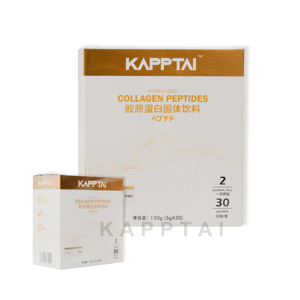
Bulk importers are rapidly moving away from standard, un-hydrolyzed native proteins toward enzymatically cleaved micro-peptides (e.g., Marine Collagen <2000 Da). Hydrolyzed peptides bypass complex digestion, absorbing directly through the intestinal mucosa into blood circulation.
With expanding market entry requirements in the Middle East (GCC region), Southeast Asia (JAKIM/MUI certification), and Western clean-label retail, suppliers must guarantee porcine-free gelatin, non-GMO starch carriers, and synthetic-binder-free manufacturing options.
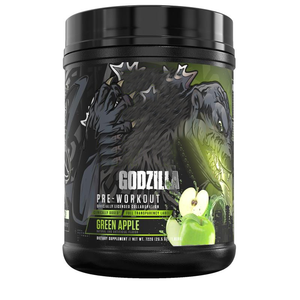
Sports nutrition and longevity markets are shifting from basic caffeine-loaded powders toward scientifically backed cellular signaling agents like Phosphatidic Acid 50% (mTOR pathway activator), TUDCA (endoplasmic reticulum stress reduction), and purified Shilajit (Fulvic acid mitochondrial carriers).
Global importers are consolidating vendor rosters to minimize supply chain vulnerability. Partnering with contract manufacturers offering 6 distinct dosage forms (softgel, tablet, capsule, liquid, gummy, powder) under one quality umbrella significantly reduces audit costs and lead-time delays.
Leading exporters must provide turnkey documentation, including Health Canada NPN product licensing, Certificate of Free Sale (CFS), Good Manufacturing Practice (GMP) certificates, stability testing data, and standardized batch production records.
To accelerate go-to-market speed for private label brands, top-tier export facilities are offering tiered batch scaling—allowing brands to validate regional market demand via low MOQ pilot batches before transitioning into mass-market industrial runs.
To provide maximum Information Gain for procurement officers and research scientists, the following section details the bio-chemical mechanisms, specification controls, and formulation requirements for premier export supplement compounds:
Extracted from deep-sea fish skin and scales via controlled enzymatic digestion, marine collagen consists primarily of Type I collagen peptides rich in glycine, proline, and hydroxyproline. Unlike bovine collagen, marine peptides possess an average molecular weight under 2,000 Daltons, dramatically enhancing solubility in liquid formats and increasing human gut absorption efficiency by up to 1.5 times. Quality control requires rigorous heavy metal screening for lead, mercury, arsenic, and cadmium using ICP-MS to ensure total compliance with international safety limits.
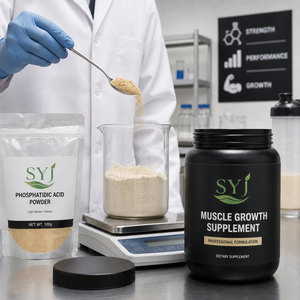
Phosphatidic Acid (PA) is a critical phospholipid messenger that directly activates the mammalian target of rapamycin complex 1 (mTORC1) signaling pathway. Mechanistic trials demonstrate that PA binding to the FKBP12-rapamycin-binding (FRB) domain of mTOR enhances muscle protein synthesis independently of hormonal triggers. Raw material specifications demand precise 50% active content assay via HPLC, ensuring minimal soy allergen residues and optimal bio-stability when blended into capsule or powder drink matrices.
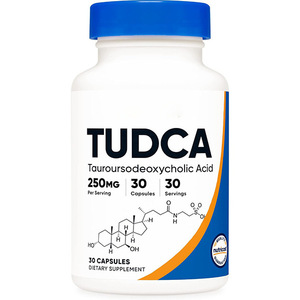
TUDCA is an ambiphilic bile acid formed by conjugate linkage of taurine to ursodeoxycholic acid (UDCA). Widely utilized in advanced hepatic care formulations, TUDCA acts as a chemical chaperone that prevents endoplasmic reticulum (ER) stress, blocks apoptosis through mitochondrial membrane stabilization, and promotes healthy bile clearance. OEM manufacturing requires strict humidity-controlled encapsulation environments to prevent hygroscopic clumping of raw TUDCA powder.
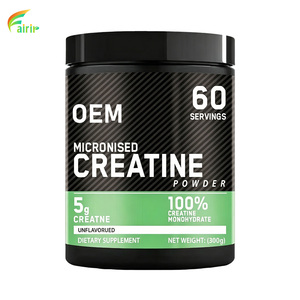
Creatine Monohydrate serves as the metabolic precursor to phosphocreatine, regenerating adenosine triphosphate (ATP) in cardiac and skeletal muscle tissue. Micronization via mechanical jet-milling reduces particle size to 200 mesh (approx. 75 microns), eliminating gritty mouthfeel and dramatically accelerating dissolution in aqueous solutions. High-grade OEM supply requires strict verification that creatinine (the degradation byproduct), dicyandiamide, and dihydrotriazine levels remain non-detectable via assay.
Operating from our premier Health Canada site-licensed facility at 980 Tapscott Rd, Scarborough, Ontario, NutraLab Canada Corp. brings over 25 years of pharmaceutical-grade contract manufacturing expertise to global importers. We provide single-source OEM/ODM capabilities across six complete dosage forms, eliminating the friction of coordinating multiple contract partners.
High-speed rotary die encapsulation for Omega-3 fish oils, Vitamin D3, CoQ10, and complex lipid-soluble formulas with customized shell opacity and shape.
Direct compression and wet granulation lines producing chewable, coated, sublingual, and extended-release multi-vitamin or botanical tablets.
Automatic filling of two-piece hard gelatin, HPMC vegetarian, and delayed-release acid-resistant capsules for botanical powders and probiotics.
Aqueous phase liquid formulation, flavor masking, and precision dosage filling into glass/PET bottles for pediatric, senior, and liquid herbal lines.
Pectin and gelatin gummy manufacturing with custom mold geometries, low sugar profile options, and high thermal stability for international transit.
V-blender ribbon mixing for homogeneous distribution of micro-ingredients, packaged into tubs, stand-up pouches, or single-serve stick packs.
From initial concept and formula authorization to customs cleared export dispatch, our structured project management guarantees seamless execution.
Needs assessment, target market regulation analysis, dosage format evaluation, and budget alignment.
Formulation drafting, raw material supplier qualification, sample creation, and transparent unit pricing quotation.
Health Canada NPN submissions, artwork label compliance review, and target market export document prep.
Pilot run testing, packaging artwork sign-off, color matching, and batch production record generation.
Cleanroom batch manufacturing, in-process testing, heavy metal/microbial release testing, and CoA generation.
In-house packaging, serialization, palletizing, Certificate of Free Sale issuance, and freight dispatch.
Addressing key technical, regulatory, and logistical questions surrounding international supplement manufacturing and export clearance.
A top-tier supplement exporter must maintain verified cGMP (Current Good Manufacturing Practice) compliance under national health authorities. In Canada, facilities must hold an active Site Licence issued by Health Canada NNHPD. Additional internationally recognized certifications include US FDA Registration, ISO 22000 Food Safety Management, Halal Certification, and NSF International audits. These accreditations guarantee that batch production follows validated Master Manufacturing Records (MMRs) and strict analytical testing.
Health Canada enforces some of the world's most stringent regulatory benchmarks for Natural Health Products (NHPs). When overseas distributors import supplements produced in a Health Canada site-licensed facility, foreign customs officials recognize the stringent quality oversight—including enforced limits on heavy metals, pesticides, microbial pathogens, and active ingredient potency. This drastically minimizes customs quarantine delays and product rejection rates.
MOQs vary depending on the dosage form and raw material cost. Standard two-piece capsules and compressed tablets typically feature lower MOQs (starting at 100,000 units or 1,000–3,000 bottles), whereas softgel encapsulation and gummy production runs generally require larger batch volumes (e.g., 300,000+ units) due to machine setup, gel mass preparation, and line equilibration loss. Customized powder blends usually depend on total kilogram blender capacities (e.g., 500kg minimums).
Yes. Our dedicated in-house regulatory department generates comprehensive export documentation packages. This includes official Certificates of Free Sale (CFS) authenticated by recognized trade authorities, Certificates of Analysis (CoA) for every manufactured lot, Certificates of Origin, Halal attestation documentation, and Health Canada Natural Product Number (NPN) licensing references.
Every batch undergoes mandatory 3-phase testing: 1) Raw Material Identity and Purity testing upon arrival using High-Performance Liquid Chromatography (HPLC), Fourier-Transform Infrared Spectroscopy (FTIR), or UV-Vis; 2) In-process testing for weight variation, disintegration, hardness, and fill volume uniformity; and 3) Finished Product testing verifying target active label claims, absence of heavy metals (Pb, Cd, As, Hg), and total micro count (E. coli, Salmonella, Yeast & Mold).
Native collagen possesses a high molecular weight of approximately 300,000 Daltons, making it insoluble and difficult for the human gastrointestinal tract to hydrolyze. Enzymatically hydrolyzed collagen breaks these long protein chains into bioactive micro-peptides under 2,000 Daltons. These low-molecular-weight peptides dissolve completely in liquids without gelling and are rapidly absorbed into the bloodstream, stimulating fibroblasts to synthesize new Type I and Type III collagen in skin, cartilage, and bone tissue.
Phosphatidic Acid (PA) is a key lipid messenger that directly stimulates the mechanical target of rapamycin (mTOR) signaling pathway. mTOR regulates translation initiation of skeletal muscle protein synthesis. Clinical studies indicate that 750mg of daily Phosphatidic Acid supplementation, combined with resistance training, leads to greater gains in lean muscle mass and upper-body strength compared to resistance training alone.
Hygroscopic powders absorb ambient atmospheric moisture, leading to clumping, degradation, and loss of assay potency. To protect product stability throughout international maritime transit, packaging lines utilize HDPE bottles with induction foil seals, pharmaceutical-grade desiccant packets, or high-barrier multi-layer foil sachets (Alu-PE-PET films) that block water vapor transmission rate (WVTR) and oxygen penetration.
Your brand retains 100% ownership of your proprietary custom formulations and artwork. Non-Disclosure Agreements (NDAs) are executed prior to formula formulation exchange. Custom formulas developed exclusively for your brand will never be released, sold, or shared with third-party competitors.
Standard OEM production lead times generally range between 6 to 8 weeks following artwork approval and raw material analytical clearance. In stock catalog formulas or repeat orders can move faster (4 to 5 weeks). Fully custom formulations requiring new Health Canada NPN licensing submissions require additional regulatory review time prior to commercial manufacturing.
Ready to scale your private label brand or source certified bulk health supplements? Contact our regulatory and contract manufacturing engineers today to discuss your formula, request samples, or obtain a detailed factory direct quotation.